

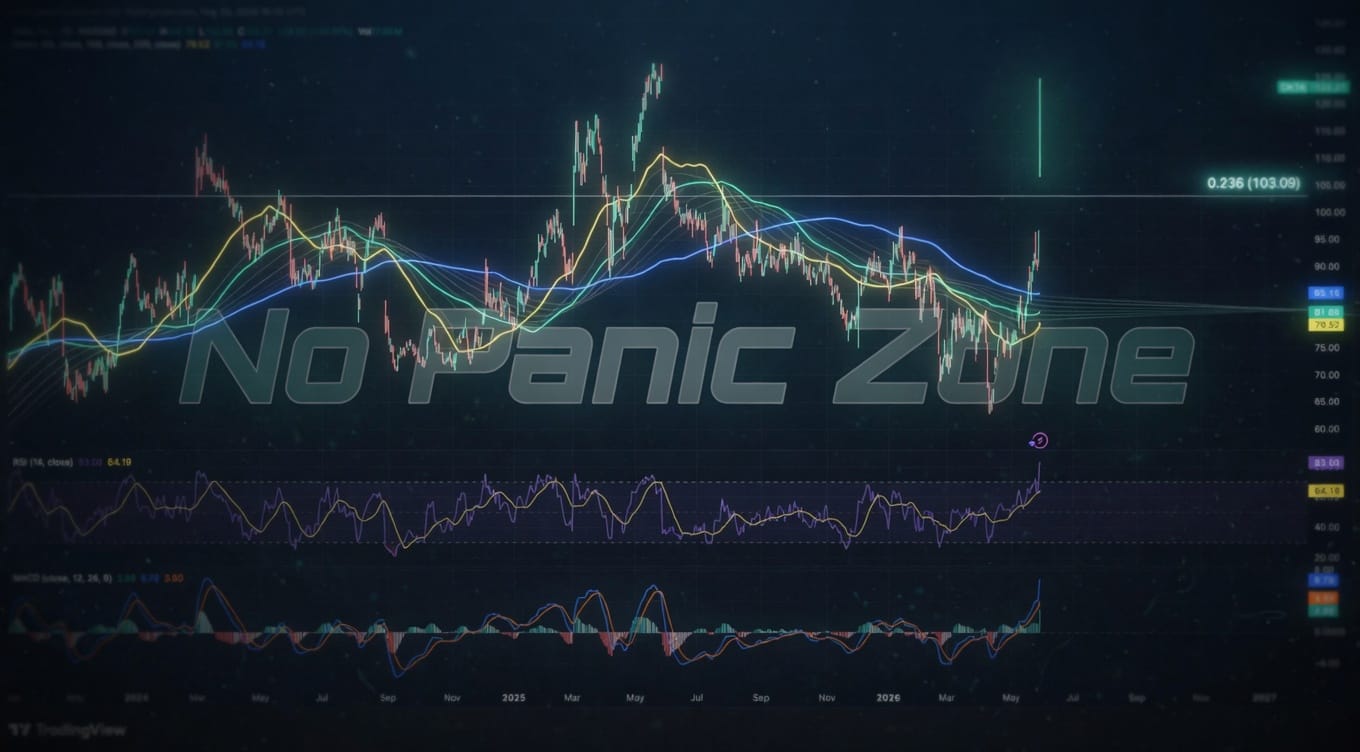
Micron rallied after earnings. Then it didn't. The stock gave back nearly everything it gained. Retail traders now stare at their screens wondering if they bought a semiconductor company or a f*cking boomerang.
The memory chip maker surged post-earnings like it discovered a new law of physics. It didn't. Gravity still works. The stock slid to start the week because charts don't care about your earnings narrative. They never did.
Traders are now divided on where it goes next. Half think it bounces. Half think it craters. All of them are looking at the same lines. None of them know what those lines mean tomorrow. This is called technical analysis and people pay $3,000 a year for access to better versions of the same useless squiggles.
The post-earnings surge lasted exactly long enough for someone to write three bullish articles and upload a YouTube thumbnail with green arrows. The reversal happened faster than you could cancel your limit order. Somewhere a day trader just learned what slippage means. He learned it with real money.
Memory chips power everything. Phones. Computers. The device you used to buy Micron at the top. The irony writes itself but you were too busy checking premarket quotes to notice.
The stock is now right back where it started. The round trip cost you nothing except the spread, the commission, the emotional damage, and the growing suspicion that maybe you should have just bought an index fund like your brother-in-law suggested at Thanksgiving. But you didn't because you're a trader and traders don't buy boring things that go up slowly over thirty years.
Micron makes memory chips. You'll need several of them to remember what your account balance looked like before you decided earnings were predictable.
Photo by Brecht Corbeel on Unsplash



Leave a Comment